Verily, the dust has settled on the orgy of silicon, frenzied capitalism and silly AI marketing straplines that was the . All that's left bar the intriguing and quite possibly lethal cocktail of air-travel contracted pathogens currently laying waste to the post-Computex PCG team is to decide what to make of it all.
More specifically, what to make of AMD and Intel's new mobile APUs? In short, should PC gamers be more excited by or ?
To be even more specific, which of the two do we think has the makings of the better chip for the next generation of ? Because it's almost certainly handhelds where these chips will have the biggest gaming impact.
We already have mobile CPUs that are plenty good enough for gaming in laptops. In laptops, you want a good dedicated GPU, so the integrated graphics in these new chips from Intel and AMD isn't terribly important for gaming in that form factor. But in a handheld? It'll all happen on that one chip.
In some ways, they're a bit of a mismatch, Lunar Lake and Strix Point. , as Strix Point is branded, has 12 CPU cores to Intel's eight. It's a bit more complicated than that as both chips have two types of CPU core. But in raw processing terms, you'd think AMD has the clear edge.
On the other hand, CPU core count and indeed outright CPU grunt isn't always critical in a handheld gaming context. What you want is enough CPU power without murdering the battery. Eight cores is usually plenty for gaming, especially if those cores are quick. Adding more and more cores only gets more problematic when it comes to power consumption.
So, efficiency is where Intel scores its first on-paper points. Intel seems to have absolutely pulled the stops out with Lunar Lake to make it power efficient. For starters, it has on-package memory, which is a clear efficiency move even if it does make post-purchase memory upgrades impossible.
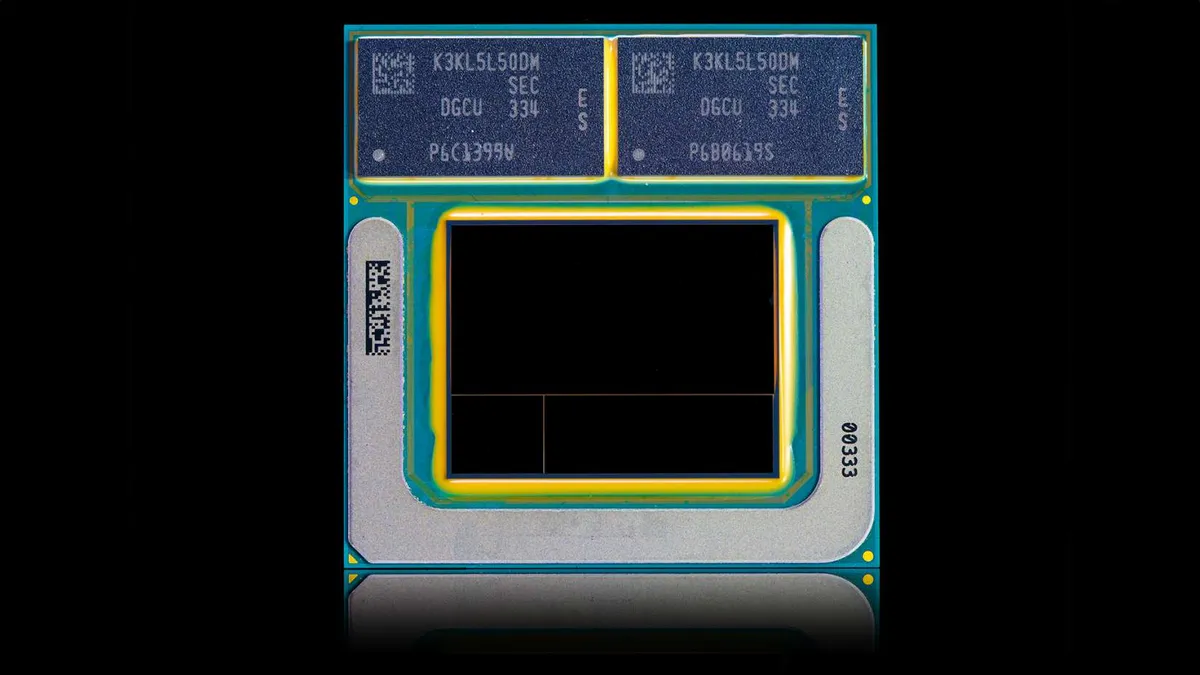
Intel has also wound back on its chiplet approach with Lunar Lake. It only has two active chiplets, where Meteor Lake has four. All of the really important, power-hungry bits are located in the main compute tile. Inter-tile comms and operations are generally more power hungry than intra-tile comms and operations, so fewer chiplets is likely a good thing for efficiency, too.
For sure, AMD's APU is a single-chip monolithic design, which is generally the best approach for efficiency, but the point is that Intel seems to have minimised its disadvantage there. Perhaps most importantly, that big compute tile in Lunar Lake is , which is just about the most advanced silicon currently available. In truth, N3B hasn't impressed all that much with Apple's M3 chips.
TSMC's revised N3E node that debuted with the Apple M4 chip about a month ago, but bk8สล็อตฟรี isn't currently used in any other CPU or GPU, does look quite a bit better. But Intel still has N3B to AMD's N4 silicon in PIGSPIN เครดิตฟรี 100 Strix Point. And N4 is merely a revision and rebrand of TSMC's N5 node. So, Intel has a clear node advantage and that typically bodes well for power consumption.
Intel's Lunar Lake also has what you might call a full-on hybrid CPU architecture. Intel's Performance and Efficient cores are of quite different designs, with the latter very much optimised for low power consumption.
By contrast, the in AMD's Strix Point are much more similar, with the main differentiator being cache availability. The two cores are functionally identical.
Intel also claims to have made huge strides with the performance of its Efficient cores in Lunar Lake, which are now said to be on par for IPC with the Raptor Cove Performance cores in its fastest current desktop CPUs, such as the .
All of which means from a CPU and chip architecture perspective that it looks like Intel will have an efficiency advantage. Since both chips seem likely to have sufficient CPU performance for gaming, that's advantage Intel on the CPU side. AMD's Strix Point will very likely have the more powerful CPU, but it won't make much difference to your handheld frame rates.
Instead, those frame rates will likely hinge on the other major part of the chip, the iGPU or integrated graphics. This aspect is much harder to judge. In some ways we have a better idea of what AMD is bringing. Strix Point will top out with 16 graphics compute units, up from 12 in the old Hawk Point APU seen in various existing handheld gaming rigs, like the troubled .
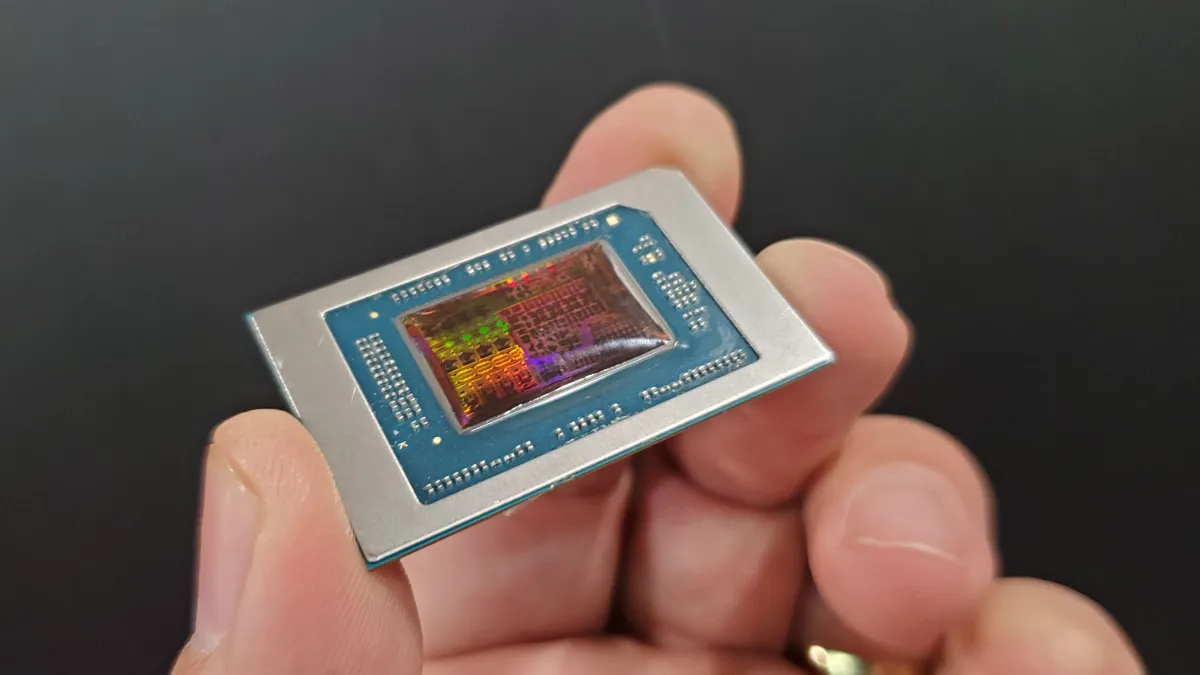
The iGPU in Strix point also runs a little faster, up to 2.9 GHz to Hawk Point's 2.7 GHz maximum. On paper, then, raw raster graphics rendering performance should be up by about a third, maybe a touch more.
However, the iGPU in Strix Point has also been upgraded from AMD RDNA 3 spec to . In truth, we don't have many details as to what RDNA 3.5 means versus the existing RDNA 3 graphics architecture. But one recurring rumour is that RDNA 3.5 has a hefty boost in ray tracing performance. We hope that's true, because in all other regards, RDNA 3 hardware is very good. And RT upgrade is just what it needs to be great.
As for Intel's Lunar Lake iGPU, that's much more of an unknown. Intel has said two things of note. First the iGPU in Lunar Lake has eight EU or graphics execution units, the same number as the existing that was used to arguable effect in the MSI Claw gaming handheld, along with a zillion laptops.
But that's eight of Intel's new Battlemage spec EUs, where Meteor Lake leverages the Xe-LPG architecture, more akin to the Alchemist graphics architecture. Again, we just , our first experience of it will be when Lunar Lake is released later this year.
That said, Intel's second revelation regarding Battlemage in Lunar Lake is a claimed 50% performance uplift in gaming performance over Meteor Lake. At the same time, AMD's old Hawk Point was generally a bit faster than Meteor Lake. So when you triangulate all the available data points, well, it's looking pretty tight when it comes to raw iGPU performance.
The caveat to that is Intel's graphics driver quality. It's much, much improved from the train wreck of patchy performance that was the original Intel Arc graphics family at launch. But you'd still give AMD the clear advantage when it comes to performance consistency over a suite of games.

: Our verdict on Valve's handheld.
: Get decked out.
: What's the real battery life?
: What's the best travel buddy?
Just to circle back to the earlier point on efficiency, however, 16 RDNA 3.5 cores on TSMC N4 silicon is a bit of a worry when it comes to power consumption. It's not like existing handhelds have great battery life with 12 RDNA 3 huc99สล็อตฟรี cores, and AMD's current APUs use the same N4 TSMC node.
Maybe AMD has optimised RDNA 3.5 for efficiency and that's what marks it out from RDNA 3. But if so, AMD hasn't said much about that and tech companies don't often turn down an opportunity to promote whatever upgrades and refinements they've added to their chips.
The bottom line, then, goes something like this. Intel seems like it has put more effort into efficiency than AMD and a handheld based on Lunar Lake could end up offering significantly better battery life than the AMD Strix Point competition as a result.
On the performance side, you'd give the frame rate edge to AMD and its new Strix Point chip. However, there's just a chance Intel might actually be competitive in that regard if Battlemage is as good as Intel claims and its drivers have been further refined. Either way, we can't wait to take the new generation of handheld gaming PCs powered by these chips for a spin. It's going to be exciting.